


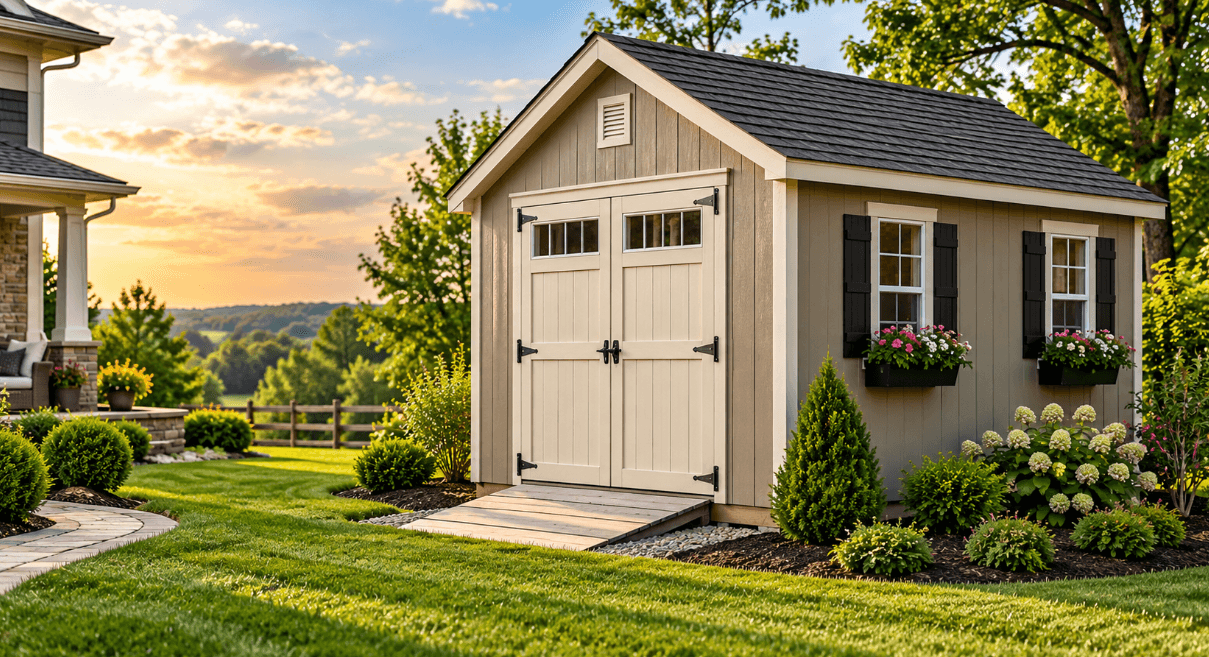
Choosing a storage shed is about more than finding a building that fits in your backyard. The right shed should provide enough space for your belongings, complement your property, stand up to local weather conditions, and meet your needs for years to come.
Whether you need somewhere to store lawn equipment, gardening supplies, bicycles, seasonal decorations, or workshop tools, it helps to consider your options before making a purchase. Shed size, roof style, building materials, access, and placement can all affect how useful the finished structure will be. For Pennsylvania homeowners, choosing a shed also means thinking about seasonal weather, drainage, available yard space, and any local requirements that may apply to an outdoor structure. At Eden Mill Buildings, you can explore different storage shed styles, sizes, and customization options to find a building that works for your property and intended use.1. Determine What You Need to Store
Before comparing shed styles, make a list of the items you want to keep inside. This simple step helps you avoid buying a building that is either too small for your needs or larger than necessary. For example, a homeowner who needs space for a lawn mower, garden tools, and a few containers may be comfortable with a compact shed. Someone storing riding equipment, bicycles, workbenches, and seasonal furniture will probably need more room. Think about how you will use the shed over the next few years, too. Your storage needs may increase as you purchase new equipment or take on additional outdoor projects.Match the shed to its purpose
- Lawn and garden storage: Consider space for a mower, trimmer, gardening tools, soil, and planters.
- General household storage: Allow room for seasonal decorations, sports equipment, bicycles, and outdoor furniture.
- Workshop: Look for enough floor space to move around comfortably, with room for a workbench and tools.
- Equipment storage: Consider door width, interior clearance, and the dimensions of larger items.
- Hobby space: If you need a dedicated area for crafts or other activities, a studio building may be more appropriate than a basic storage shed.
2. Choose the Right Shed Size
Shed size affects the amount of storage available, the space required in your yard, and the overall purchase price. The goal is to choose a building that accommodates your belongings without overwhelming the property. Start by measuring the items you plan to store. Pay attention to their height, width, and length, especially if you own a riding mower, large tools, or bulky outdoor furniture. Next, measure the proposed location for the shed. Leave enough room for doors to open fully and for you to walk around the building when necessary. You should also consider access for delivery and future maintenance.What shed size should you consider?
Small sheds: Compact options can work well for hand tools, gardening supplies, small equipment, and seasonal items. They are particularly useful when yard space is limited. Medium sheds: These offer more flexibility for homeowners who need to store lawn equipment, bicycles, outdoor furniture, and a range of household belongings. Large sheds: Larger buildings are worth considering when you need substantial storage, a dedicated workshop, or room for several types of equipment. Remember that the listed exterior dimensions do not represent the exact amount of usable interior space. Wall thickness, roof framing, shelving, and other features can affect how the space functions. If you are unsure which size offers the best value, compare your requirements with the available designs and ask about suitable dimensions before ordering.3. Compare Different Storage Shed Styles
The design of a shed affects its appearance, interior layout, and suitability for different uses. A building that looks attractive in a product photograph may not necessarily be the best choice for your particular property. Eden Mill Buildings offers several styles, including Mini Barns, Highside Barns, Quaker sheds, and Cottage sheds. Each has a distinctive appearance and may suit different storage requirements.Mini Barn Sheds
Mini Barns are a practical option for homeowners who want a compact building for everyday storage. Their traditional barn-inspired appearance works well in many residential and rural settings. Consider this style if you need a dedicated place for garden tools, smaller equipment, or seasonal belongings without requiring a large structure.Highside Barn Sheds
Highside Barns have a traditional barn-style design and can be useful when you need additional vertical space. Their layout may suit larger equipment, storage shelves, or workshop arrangements, depending on the dimensions selected. When comparing models, check the usable interior height and door dimensions rather than relying on the overall exterior appearance.Quaker Sheds
Quaker sheds feature a distinctive roofline, with a higher front section and a lower rear section. This design gives the building a recognizable appearance while providing a different overhead profile from a conventional gable-roof shed. A Quaker shed can be a good option for homeowners who want practical storage with a more distinctive architectural style.Cottage Sheds
Cottage sheds offer a more traditional, residential appearance. Depending on the design, windows and decorative details can help the structure complement a landscaped backyard or garden. This style may appeal to homeowners who want a storage building that looks like a considered part of their property rather than a purely functional outbuilding. Explore the available storage shed styles and designs to compare these options and identify a suitable starting point.4. Select Materials That Suit Your Needs
Building materials affect the shed’s appearance, maintenance requirements, and initial cost. Eden Mill Buildings offers options that include LP siding and vinyl finishes on several standard shed designs. Rather than choosing a material based on appearance alone, consider how much maintenance you are comfortable handling and how the building will be exposed to the elements.LP siding
LP siding provides a wood-based exterior appearance and can be a suitable choice for homeowners who prefer a traditional shed design. The finish and maintenance requirements depend on the specific product and installation. Ask about the recommended painting, finishing, and maintenance schedule for the building you choose.Vinyl siding
Vinyl siding offers a different exterior finish and may appeal to buyers who prefer a low-maintenance appearance. However, the underlying structure, roof, doors, and other components remain important when evaluating overall building quality.Look beyond the exterior
When comparing materials, also ask about:- Floor construction and load capacity
- Roof materials and available colors
- Door quality and hardware
- Ventilation
- Window options
- Warranty coverage
- Maintenance recommendations
5. Consider Pennsylvania Weather and Drainage
Pennsylvania experiences changing seasonal conditions, including rain, snow, humidity, and freezing temperatures. The location and preparation of your shed can make a difference in how well it performs over time. Start by looking for a reasonably level location with good drainage. Avoid areas where water regularly collects after rainfall or snowmelt. A properly prepared base helps support the building and can reduce problems associated with uneven settling. Depending on the site and the building, a suitable stone pad or another approved foundation may be appropriate. Also consider the following:- Roof design: Ask which roof options suit your intended use and local conditions.
- Ventilation: Adequate airflow can help reduce moisture buildup inside the shed.
- Ground clearance: Follow the manufacturer’s guidance for placement and drainage around the building.
- Access: Keep the entrance accessible even when the yard is wet or covered with snow.
- Maintenance: Inspect the roof, exterior, doors, and surrounding ground periodically.
6. Choose a Location That Works for Your Property
Even a well-designed shed can become inconvenient if it is placed in the wrong part of the yard. Think about how often you will use it and which items you plan to access. If you regularly use a lawn mower, for instance, placing the shed near a practical route to the lawn can make everyday tasks easier. At the same time, consider how the building will look from your home, driveway, patio, and neighboring properties. Before settling on a location, check:- Available space and property boundaries
- Access for delivery equipment
- Ground slope and drainage
- Trees, roots, and overhead branches
- Utility lines and underground services
- Door clearance and walking paths
- Local setback, zoning, and permit requirements
7. Decide Which Custom Features You Actually Need
Customization can make a shed more useful, but not every available feature will be necessary for every buyer. Start with the features that improve everyday access, storage, and functionality. Additional doors may help with larger equipment, while windows can bring natural light into a workspace. Shelving and workbenches may be useful if you plan to use the building as a workshop. Depending on the shed design, you may also want to consider:- Additional windows
- Different door configurations
- Roof color options
- Exterior finishes
- Shelving or storage arrangements
- Ventilation features
- Upgraded flooring
- Decorative details
8. Set a Realistic Shed Budget
Your budget should account for more than the advertised price of the building. The final cost can depend on the size, style, materials, custom features, site preparation, delivery arrangements, and any required work before installation. It is helpful to compare buildings with similar specifications. A small standard shed and a larger customized model are not directly comparable, even if they are advertised under the same general category. Before placing an order, ask for clarification on:- The building’s base price
- Included doors, windows, flooring, and roofing
- Additional customization charges
- Delivery distance and fees
- Site preparation or foundation costs
- Applicable taxes
- Warranty coverage
- Payment options
